Too Much of the Investing Process Depended on Me. So I Built a Better Way.
I had built a successful investment process, but it required nearly all of my attention. After COVID forced me to stop, I decided there had to be a smarter way to run it
When I returned to work in 2022 after being gone for months with a severe case of COVID, the investment operation I had spent years building had essentially stopped. Hundreds of stock-option positions had been closed or had expired while I was sick, and much of the client money was sitting in cash. For the first time in years, the machine was off.
Then I got on the phone with Tuchar, who headed my 30-person team in India. He was ready to start everything again. The questions came immediately. Stocks. Options. Hedges. Spreadsheets. Calculations. Opportunities. Math. Calculus. There was an enormous amount to analyze and a lot of decisions waiting for me.
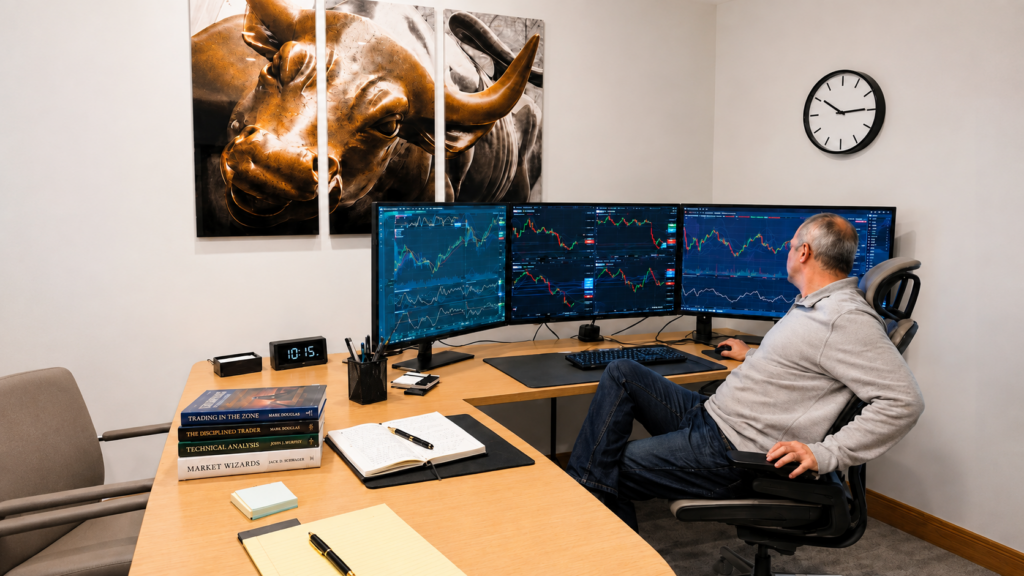
And I knew exactly what starting it again meant. It meant sitting in front of three monitors watching the market tick by tick from 6:30 in the morning until it closed at 1:00. I was day trading, so every second could matter. When the market was open, I would not take a phone call. Period.
When the U.S. market closed, I still had positions to analyze and overseas markets to worry about. What was happening in Europe? What was happening in Asia? What could happen overnight that might affect us the next morning? Sometimes I woke up at two or three in the morning just to see what was happening.
For 15 years, I did not take a vacation day. Period.
Now I was still recovering from COVID, listening to everything it would take to start that life again. I remember thinking, Oh my God. No thanks.
For the first time, I wasn’t asking how to get the investment operation running again. I was asking whether I wanted to run it that way at all.
If I were building Blue Chip Macro again today, would I deliberately build the investment process this way?
My answer was no.
Not because Hampton was failing. It was profitable and successful. The problem was the life that came with owning it. I was involved in too many decisions and processes, and almost everything eventually found its way back to me.
Once I looked at Hampton as a buyer, I could see what was creating the burden: too much inventory, too much money tied up, too many products and manual processes, an overflowing warehouse and too much dependence on the owner. I wasn’t trying to make Hampton smaller. I wanted a profitable company that used capital intelligently, operated without constant intervention and was a business I actually wanted to own.
So I went through everything: revenue, expenses, margins, products, inventory, freight, tariffs, processing fees, advertising, customer terms, warehouse costs, sales channels, staffing, systems and my own role. We renegotiated costs, eliminated expenses that no longer made sense and questioned things that had survived mainly because that was how we had always done them.
The examples below are only a few of the changes. The larger question was:
Knowing what I know today, what would I keep, what would I change, and what would I stop doing entirely?

Later, I developed a more complicated strategy designed to make the portfolio less dependent on whether the overall market simply went up or down. It primarily used stock options and the passage of time. The technical term is delta-neutral hedging.
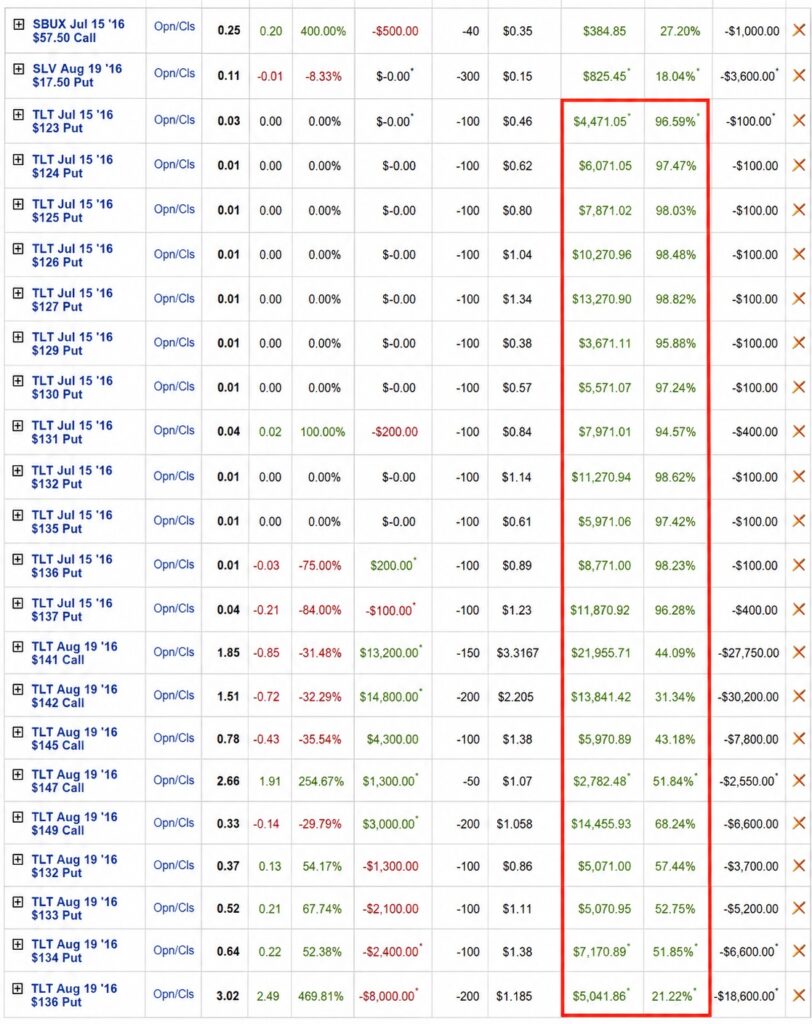
The strategy became an important part of Blue Chip’s growth, but running it required an increasingly complicated operation. At its peak, we were managing more than 800 individual option positions.
My team in India analyzed stocks and options, ran models, back-tested ideas, calculated risk and figured out how hundreds of positions interacted with one another as markets moved. There was a tremendous amount of math and calculus behind it.
I also had a live financial-news service, what traders call a squawk box, running throughout the day so I could hear market-moving news the moment it happened. I watched charts, news and market levels constantly because I believed almost anything could become important.
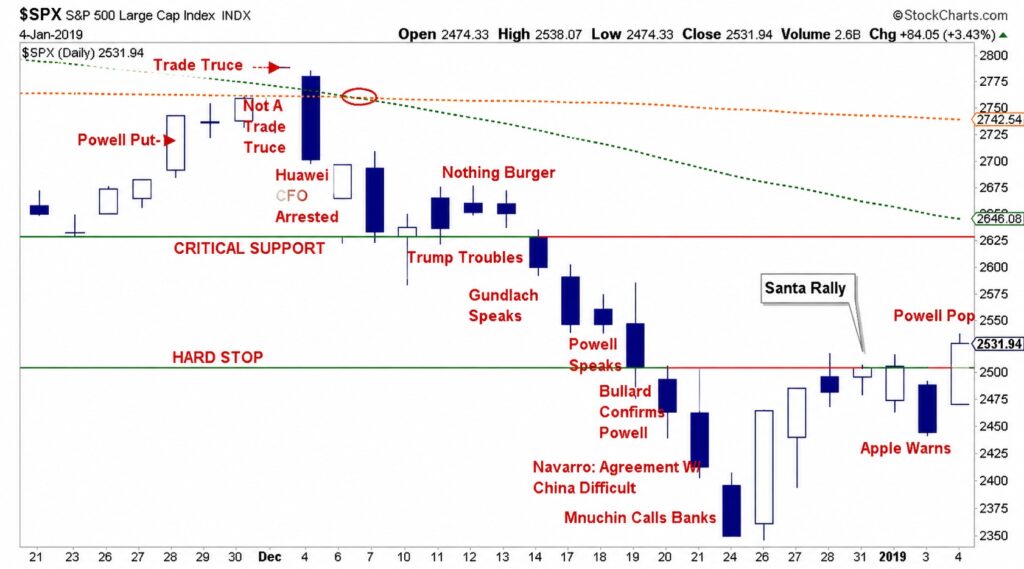
Then one day I found out what sixty seconds could cost.
The Most Expensive Bathroom Break of My Life
In July 2020, during the uncertainty over whether California schools would reopen, I stepped away from my desk to use the bathroom.
I was gone for less than a minute.
The squawk box was still running, and while I was away I heard an announcement about Governor Gavin Newsom delaying school reopenings. I rushed back to my screens. By the time I got there, I remember seeing that my clients and I were down almost $4 million.
I became convinced that if I had been sitting at the computer when the announcement came through, I could have reacted faster and limited some of the loss. I started calling it the most expensive bathroom break of my life.
After that, leaving my screens became even harder. There were days when, if I needed to urinate during market hours, I used a bottle or jar next to my desk rather than walk away. Today, that sounds ridiculous. At the time, it felt completely rational.
And that was the real problem.
The old system wasn't broken. That was exactly why it was so hard to question.
The business was growing. The strategy had become an important part of what we did. When something is failing, you naturally ask what needs to change. When something appears to be working, you tend to keep feeding it.
I did not wake up one morning and choose all that complexity. It accumulated one reasonable decision at a time.
COVID Forced Me to See It Differently
In August 2021, I became severely ill with COVID and was hospitalized. I did not meaningfully return to work until the following year.
Until then, I had always been inside the investment process, reacting to whatever came next. Being forced away from it gave me something I had never had before: distance.
When I returned, I could finally look at the operation as something I was choosing, rather than something I simply had to keep running.
I didn’t want my old life back.
So instead of rebuilding everything, I started deciding what was actually worth keeping.
I Started Removing What Didn't Add Enough Value
I was not giving up on investment management, and I was not saying I would never sell another option. I went back to the way I had invested successfully before developing the more complicated options strategy: find companies I like, research them, understand what I am buying and buy when I believe the opportunity makes sense.
Then I examined the work surrounding those decisions. Three people in India had really stepped up while I was sick, so I kept those three.
I looked at our investment history too. Where had we made our best gains? Where had our biggest losses occurred? Where were we spending a lot of time and attention without getting enough in return?
Instead of trying to follow companies all over the world, I focused primarily on larger U.S. stocks where good information was readily available and where we could buy or sell easily.
I also became more selective about industries. Biotechnology was an obvious example. A single clinical trial or regulatory decision could dramatically change the value of a company overnight. Other industries came with risks and variables I no longer believed we needed to spend our time trying to predict.
That did not make them bad investments. It simply meant we didn’t need to play every game.
I Stopped Trying to Watch the World Myself
Another problem was what happened while I slept. Europe and Asia kept moving. Companies made announcements. Economic news came out. My old solution had been to keep checking.
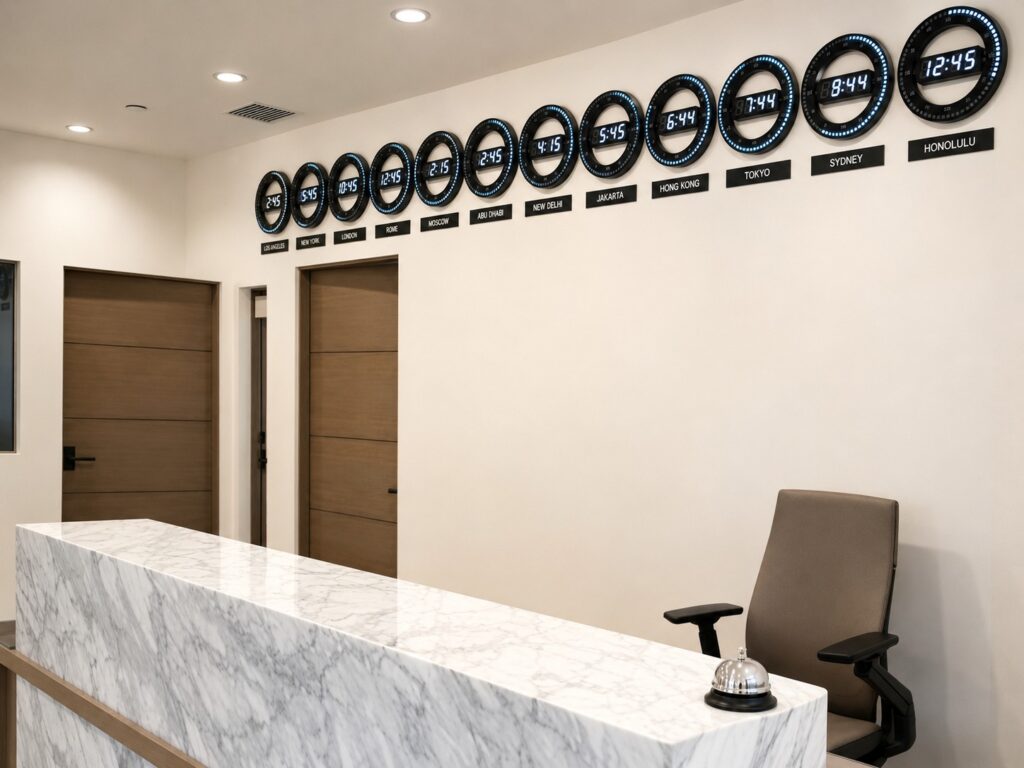
I decided to build a better system instead.
As part of the rebuilt process, I hired an analyst in India who had both an MBA and a CFA. I spent a lot of time training him because I wanted him to understand more than which headlines to send me. I wanted him to understand how I thought.
What mattered? What was noise? What could materially affect one of our investments? What actually deserved my attention?
While I slept, he monitored overseas markets, news and developments. When I started working in the morning, he could tell me what had happened overnight, what was developing and what I needed to know going into the day.
I trusted his judgment because I had invested the time to train him. I still made the investment decisions, but I no longer had to personally monitor a world that never stopped moving.
Then I Questioned Day Trading
The next question was more fundamental.
Why was I day trading at all?
I asked my analysts to study historical returns from owning stocks during different parts of the day. I wanted to know whether trading throughout the market session was giving me enough of an advantage to justify the attention it required.
For the way I invested, I did not see enough evidence that it was.
So I stopped day trading and canceled the squawk box.
That did not mean becoming less involved in managing client money. It meant separating the work that actually required my experience and judgment from the work that didn’t.
I Built a Filter Around My Judgment
Today, I follow a universe of approximately 1,200 stocks, but I do not personally go through 1,200 companies every morning.
I built a new screening algorithm around the characteristics I look for in individual stocks. That is different from the old options strategy. Its job is not to make the investment decision for me. Its job is to narrow a very large universe into a much smaller group that may deserve attention.
My team also monitors company news, earnings, markets and other developments. I trained my longtime executive assistant to review charts, organize research and help narrow what needed my attention.
The goal is not to gather as much information as possible. It is to make sure the right information reaches me.
I generally spend an hour or two in the morning reviewing what happened overnight, what needs my attention and whether anything in the portfolio needs to change. Some days there may be only two or three potential investments worth considering. Other days there may be more.
Then I step away. Someone else monitors the market during the day, and I return during roughly the final hour before it closes to review the portfolio again.
I still make the final investment decisions and the trades.
I did not delegate away my judgment. I stopped requiring myself to personally perform every step that led to it.
The Hardest Part Was Walking Away
At first, not watching the market all day felt strange. I had done it for so many years that I genuinely did not know what to do with myself. I had FOMO.
I sometimes think about it like finding a $100 bill outside your front door. Of course you pick it up. Then you see another one a few feet away, so you pick that one up too. Then there is another.
When do you stop walking?
That was how the market felt to me. If another opportunity existed and I wasn’t there to capture it, I felt like I was leaving money on the ground.
But there will always be another opportunity. That is true in the stock market and in business. There will always be another customer, product, project or problem you could pursue.
The opportunity may be real. That does not make pursuing it free.
My health mattered. My life mattered. I had capable people around me, I had trained them, and the decisions that actually needed me were still reaching me. It took about three months to build the new process, refine it and learn to trust it.
To this day, I can still look at the market and think, I could have traded that. I could have made money today.
Maybe I could have.
What I know is what living that way would require from me. I don’t want to pay that price anymore.

Would You Buy Your Own Business?
That experience changed the way I look at businesses far beyond investment management.
Today, one of the questions I ask business owners is:
Would you buy your own business?
The point is not whether you want to sell it. It is whether, knowing everything you know today, you would deliberately choose the business exactly as it operates now.
I wanted to own Blue Chip Macro. I just would not choose to run its investment process the same way again.
Successful businesses accumulate complexity gradually. Most of it made sense when it was added. That does not mean all of it still makes sense today.
Looking at your company as if you were choosing it again forces you to separate what still creates value from what has simply become part of the way things are done.
The old Blue Chip Macro investment process worked. That was why I kept running it for so long.
Only when I was forced to stop did I finally ask whether I would choose it again.
I wouldn’t.
A process can work and still cost too much.
Related Posts