
Would You Buy Your Own Business? I Wouldn’t. I Changed Mine and Made It Worth More.
Would You Buy your business and the life that comes with it?
I spent decades building successful businesses without realizing how much of my life they had consumed. It took a severe case of COVID to make me stop and ask whether the life I had built was one I actually wanted.
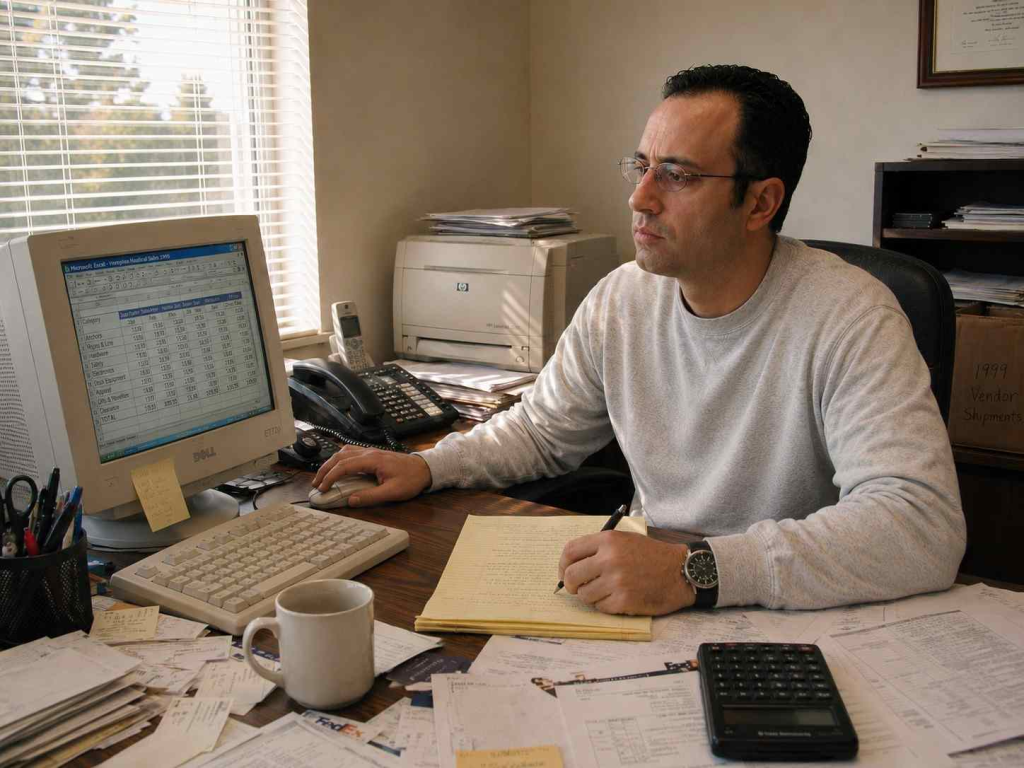
The question is not only whether you would buy your own business. It is whether you would buy the life that comes with owning it.
At the time, I was running two successful businesses.
I ran Blue Chip Macro, an investment management company with more than $100 million in client assets. We had roughly 800 individual option positions, and I spent much of my day watching the portfolio, the hedges, the markets, and the risks.
I also ran Hampton Nautical, an e-commerce company I had started in 1997. By then, I had spent years designing thousands of products, from handcrafted model ships and America’s Cup yachts to telescopes, compasses, lanterns, and nautical décor.
We already had an enormous catalog.

And Amazon wanted more.
Our Amazon account representative kept asking the same question:
“What new products do you have?”
Amazon was buying essentially every new product we offered at the price we proposed.
Think about what that does to you as an entrepreneur.
I could come up with an idea, design it, have our factories make it, and one of the largest retailers in the world was already waiting to buy it.
Why would I stop?
That Saturday gave me exactly what I thought I wanted. The stock market was closed. Hampton Nautical’s factories in China and India were closed. So was our U.S. operation. I had no meetings, nobody needed an immediate decision, and there was very little chance anyone was going to interrupt me.
I could review hundreds of option positions without watching prices change every second. Then I could spend the rest of the day doing something I genuinely enjoyed: designing even more Hampton products for Amazon to buy.
It was a beautiful summer day. Years earlier, I probably would have been playing golf.
Instead, I was happy that nobody was going to bother me while I worked for fourteen hours.
That was when it hit me.
My idea of a great Saturday had become uninterrupted time to create even more work for myself.
I had never stopped to ask whether I wanted the life that came with all of it.
I just kept working.
Success Kept Giving Me Reasons to Say Yes
Neither business became that demanding overnight. They got there one successful decision at a time.
At Hampton Nautical, a new product sold, so I made more. Amazon wanted more products, so I kept designing them. More products meant more workers, raw materials, inventory, factory capacity, inspections, shipping, warehouse space, and management.
At Blue Chip Macro, the same thing was happening in a different way. My research, investment strategies, algorithms, and approach to risk management were working the way I intended. Clients added more money. They referred friends and other investors. More money came under management.
More products. More positions. More people. More monitoring. More decisions.
And every yes gave me more to manage, more to think about, and more reasons to keep working.
When Amazon Wanted Everything
In 2015, Amazon called Hampton Nautical and told us it wanted to begin buying our products directly.
I told the representative we already sold on Amazon.
“No, you don’t understand. Right now, you sell on Amazon. We are Amazon. We want to buy your products directly and sell them ourselves.”
I asked what they wanted.
“Everything.”
At the time, Hampton had roughly 5,000 products. Fulfilling Amazon’s initial orders was a massive undertaking, but then the reorders began coming. Products that had once sold a few at a time suddenly needed to be produced in quantities we had never imagined.
The opportunity was enormous, so we kept building to meet it.
Within a few years, our catalog grew from roughly 5,000 products to about 8,000, and at our peak we were introducing close to 1,000 new products a year. Hampton eventually grew to roughly 350 employees across the United States, China, and India, while our wholesale customer base expanded from about 100 accounts to roughly 2,000.

Every increase in sales required something else. More people. More raw materials. More inventory. More production. More inspections. More shipping. More warehouse space.
Our 30,000-square-foot Los Angeles facility eventually overflowed with inventory. Managers believed we needed to double the size of the warehouse.
At the time, all of that looked like success.
What I did not see was how much complexity every successful decision was adding to the business and to my life.
There Was No Off Switch
Blue Chip Macro was growing too. As client assets eventually grew to more than $100 million, I built an increasingly complex investment process around them.
Eventually, we were managing more than 800 individual sold-option positions. A 30-person team in India ran models and back-tested the strategy, while I sat in front of three large monitors following the market throughout the day.

For years, I wouldn’t take anyone’s phone call between 6:00 a.m. and 1:00 p.m. I followed the stock market every second it was open.
I believed that level of attention was part of my responsibility. If I looked away and something went wrong, my clients could lose millions of dollars.
During COVID, I learned just how much a minute could matter.
One morning, very little was happening in the market, so I got up to use the bathroom. I was gone for less than a minute.
I always had a squawk box running beside me, basically a live audio news service that announced market-moving developments throughout the day. While I was away from my desk, I heard the announcer report that California Governor Gavin Newsom was delaying the reopening of schools.
By the time I got back to my computer, all hell had broken loose.
“I had been gone for less than a minute. My clients and I had lost almost $4 million. It was the most expensive bathroom break of my life.”
I was convinced that if I had been sitting at the computer when the news hit, I could have reacted immediately and limited much of the loss.
After that, if I had to go to the bathroom while the market was open, I peed in a jar.
That was how convinced I had become that I could not look away.
When the market closed at 1:00 p.m., I spent another couple of hours talking with Blue Chip clients. Around 3:00, I shifted to Hampton Nautical and dealt with products, employees, inventory, customers, shipping, and whatever else had happened that day.
Then around 8:00 p.m., our factories in China and India began opening. Their day was starting just as mine should have been ending, and I often worked with them until midnight.
I did that seven days a week. My phone was never off. I ate most of my meals in front of a computer. For fifteen years, I did not take a single vacation day.
People told me I worked too much. I remember thinking, They don’t understand. Everybody is counting on me. I have to get this done.
The strange part was that I didn’t feel trapped.
I felt successful.
What Quietly Disappeared
Nothing disappeared from my life all at once. It happened gradually.
I had Lakers season tickets and used to go to around 20 games a year. Eventually, I started selling the tickets instead because going to a game meant giving up too many hours I could be working.
I stopped playing golf. I stopped going to my bowling league. Barbecues, poker games, and time with friends became less frequent. Dating and building a serious relationship never became much of a priority.
Even when I did leave the office, my mind usually stayed there. I might physically be somewhere else, but I was thinking about the market, a client, a shipment, a factory problem, inventory, or something that needed to be done the next day.
None of those decisions felt dramatic. There was always a reasonable explanation. I could go to the Lakers game, or I could get three more hours of work done. I could play golf, or I could deal with something at Hampton. I could take a day off, but there was always something that seemed more important.
Eventually, enough small choices added up to a life that looked very different from the one I had imagined when I started building businesses.
“One of the first signs that your business owns you isn’t what gets added to your calendar. It’s what quietly disappears from your life.”
“I Don’t Have Anybody”
In August 2021, I was hospitalized at St. John’s Hospital in Santa Monica with severe COVID.
I was struggling to breathe, and at one point the doctors wanted to put me on a ventilator. I refused.
Then a nurse asked me a question I still remember clearly.
“Sir, if you can’t make medical decisions for yourself, who should make them for you?”
I didn’t have an answer.
I was an only child. My parents were gone. I wasn’t married. I had no brothers or sisters. No aunts or uncles. No cousins.
There was literally no family member I could call.
Eventually, I gave the nurse the name of a good friend.
He still doesn’t know that to this day.

Professionally, I had employees, clients, factories, thousands of products, and more than $100 million in client assets under management. A lot of people depended on me.
But when someone asked who should speak for me if I couldn’t speak for myself, I had nobody.
That was when the question became very simple:
Why was I building all of this?
“I had built successful businesses. I had not built my life.”
COVID didn’t instantly give me the answers, but it forced me to stop long enough to finally ask the question.
I Couldn’t Work for Months. My Businesses Kept Going.
I spent about ten days in the hospital. When I finally went home, I was still extremely sick. For a while, I had two nurses working 12-hour shifts so someone was with me around the clock.
About six weeks later, my operations manager at Hampton Nautical called because he needed me to make a decision. He explained the situation, but I could barely understand what he was saying. The words sounded almost like a foreign language.
When he finished, I said something like, “Oh, okay. That’s nice.”
Then I hung up. I didn’t even say goodbye.
He figured it out himself.
And so did everyone else.
While I was sick, managers handled problems, employees stepped up, and decisions got made. The businesses kept operating.
Some of the dependence on me had been real. But I began to realize that some of it had been created by the way I managed.
“I had confused my ability to make a decision with proof that I needed to make every decision.”
When I eventually returned to work, I didn’t take all of that authority back.
Instead, I started questioning the businesses I had built.
Would I Choose My Businesses Again?
I started with Hampton Nautical.
Instead of asking how we could keep growing, I looked at the company as if I were deciding whether to buy it that day. I challenged almost everything: products, employees, customers, suppliers, sales channels, systems, inventory, warehouse space, and my own role.
We eventually discontinued roughly 5,000 of our 8,000 products and redesigned much of the company around fewer products, better systems, clearer responsibilities, and less dependence on me.
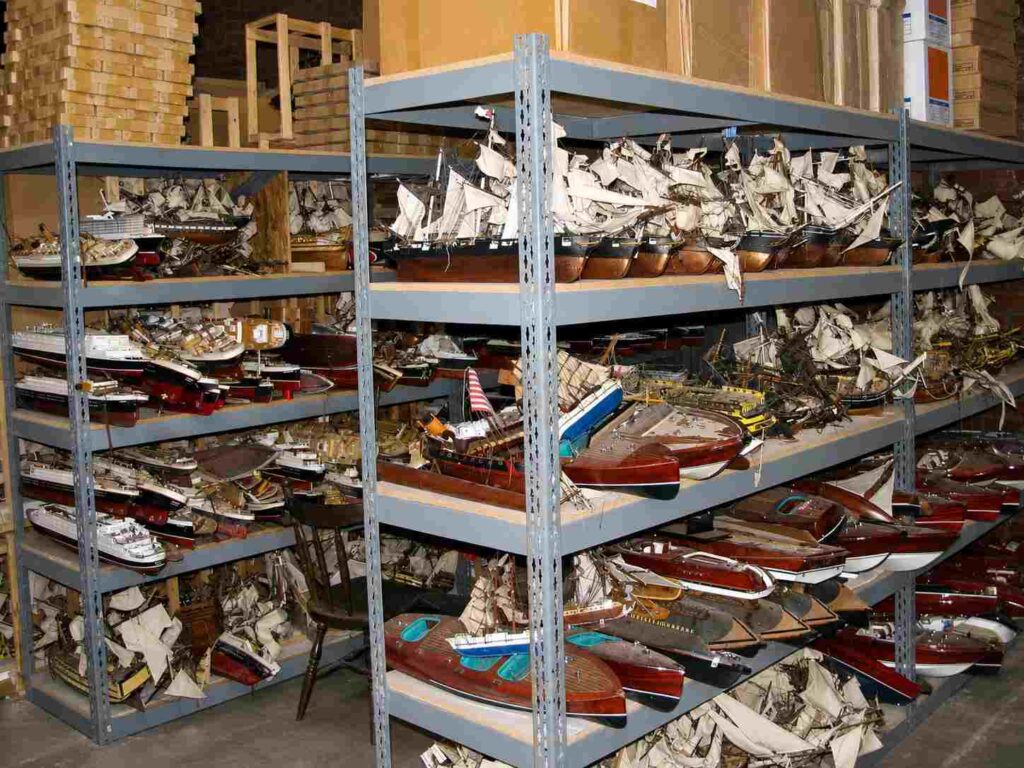
Revenue declined substantially.
Profits stayed about the same.
I didn’t get my life back by deciding to relax. I redesigned Hampton Nautical.
I did the same thing at Blue Chip Macro.
I reduced a 30-person overseas team to the three people who had really stepped up, stopped selling options, went from more than 800 positions to a much smaller portfolio, narrowed the investment universe, stopped day trading, and redesigned the research process.
I still made the final investment decisions, but I no longer needed to personally perform every step that led to them.
The process became dramatically simpler and less stressful without lowering the standard I expected from it.
I had changed two very different businesses in very different ways.
More complexity had made me busier. It had not necessarily made me better.
But the biggest return was what all of that complexity had been costing me outside the businesses.
The Life I Got Back
As the businesses became less dependent on me, something else started to change.
I had time again.
I started seeing friends more often. I went back to Lakers games. I could go to a movie, have dinner with friends, or spend time at the beach without constantly thinking about what I should be doing instead.
I also started saying yes to experiences I never would have made time for before. One of those was getting to play basketball with friends on the same court where the Lakers play at Crypto.com Arena.
Years earlier, I probably would have looked at those hours and thought about how much work I could get done instead.
Now I was actually there enjoying them.

The biggest change was that I finally made room for a relationship.
I met Pamela Maria de la Luz on a dating app. When we were trying to schedule our first date, the only day she had available was a Tuesday.
That meant having lunch while the stock market was open.
For years, I would not have considered it.
When I told my executive assistant I was leaving for lunch, she looked at me like something was wrong.
“Where the hell are you going?”
“If something happens, call me,” I told her. “But it needs to be like a nuclear bomb. Otherwise, don’t call.”
I met Pamela for lunch in downtown Los Angeles. For the first time I could remember, the stock market was open and I was not sitting in front of my computer watching it.
I never checked the market.
Pamela did not understand why that was such a big deal at the time.
She does now.
Pamela eventually became my wife, and her children became my family.
We also share a love for animals. Today, we have 14 rescue cats and dogs at home.
That shared passion became part of why we created AgaveLuz Organic Tequila. I did not want to build another company simply because I saw another opportunity to make money. I wanted to build something we cared about and give the business a purpose beyond itself. Animal rescue became part of the reason AgaveLuz exists.
That may be one of the biggest differences in how I think today.
It is not simply that I work less. I try to work smarter, but more importantly, I am much more intentional about where I spend my time and what I choose to build.
Today, I have a wife, a family, friends, businesses I care about, 14 rescue animals, and a life I actually have time to live.


That is a very different life from the one I had in the hospital when a nurse asked who should make medical decisions for me and I could not name a single family member.
I still own Hampton Nautical. I still run Blue Chip Macro. And I helped build AgaveLuz. I still work hard, and I still care deeply about what I am building.
I didn’t lose my ambition. I became more deliberate about where I invested it.
I needed a health crisis to stop and really examine what I had built.
You shouldn’t have to wait for one.
The question is not only whether you would buy your own business. It is whether you would buy the life that comes with owning it.
Related Posts
One Response